
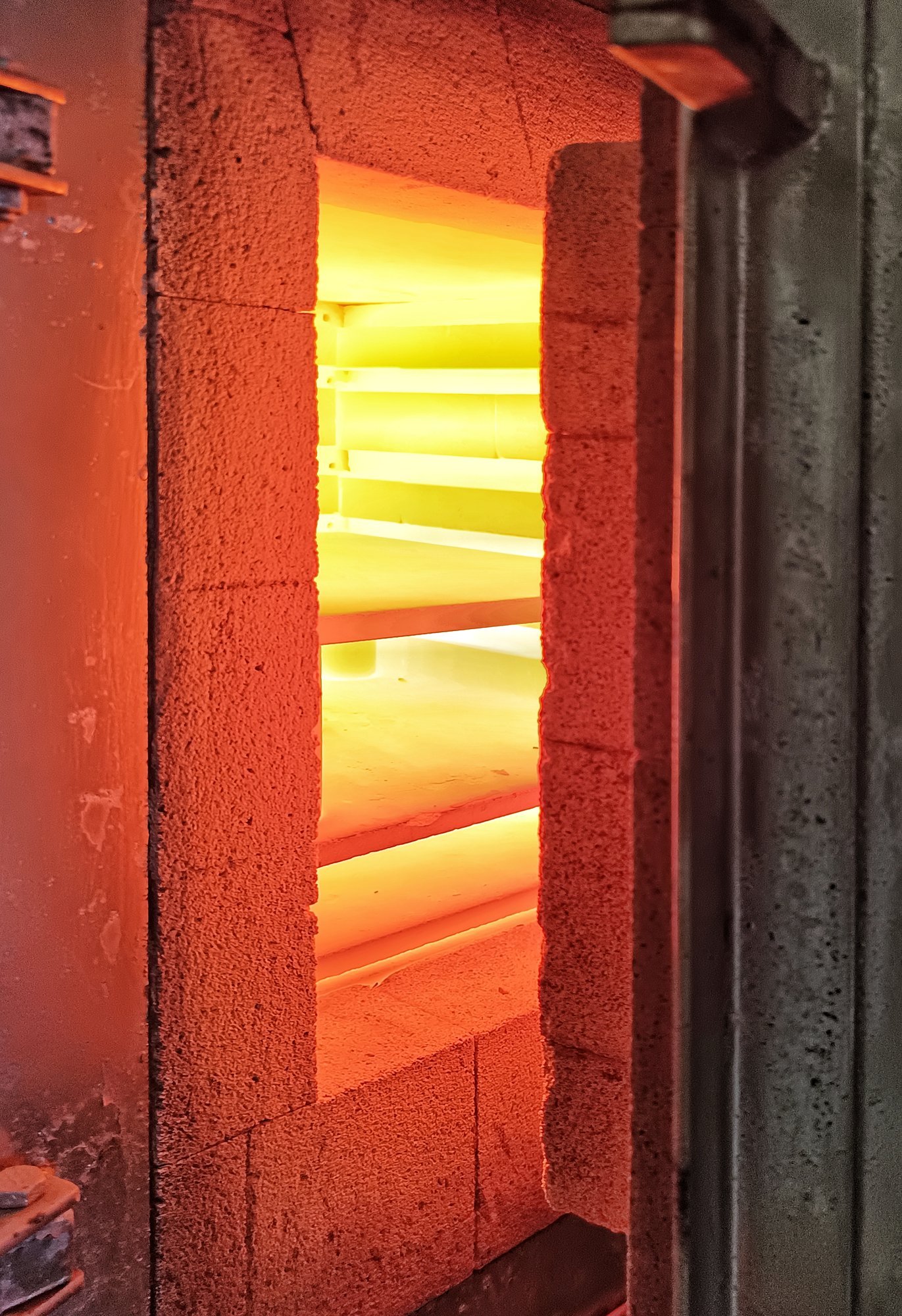
After the last hardening session, I ran the usual knifemaker’s check: a fresh file across the edge, straight out of the quench. It’s the oldest and most easily available test there is — hardened steel skates the file, soft steel lets it bite. That day the file bit more than it should have. Not on one blade: across the whole batch. Different steels, each at its proper temperature (my own numbers, cross-checked over the years against Knife Steel Nerds), each with its soak respected. And still, broadly, the hardness was neither what I expected nor what I’d accept.
When several known steels fail the same way on the same day, the steel is not the suspect. Something upstream of all of them is, and finding it turned into a full kiln calibration, done with what the kitchen had to offer.
Thinking it through, with a new tool
I worked the problem with a tool I’ve been learning to use lately: an AI. Double-edged, that one. It reasons fast, it holds more metallurgy than my bookshelf, and it will also state a wrong number with the same confident face as a right one. Working with it is a skill in itself: you learn to interrogate the answers, keep what survives checking against real sources, and discard the rest without sentiment. Same as breaking in any tool, except this one talks back.
After a long and, frankly, nervous back-and-forth, one explanation kept surviving every attack: an offset between the real temperature inside the chamber and the number on the controller. A thermocouple ages and drifts, and the controller reporting it has no idea.
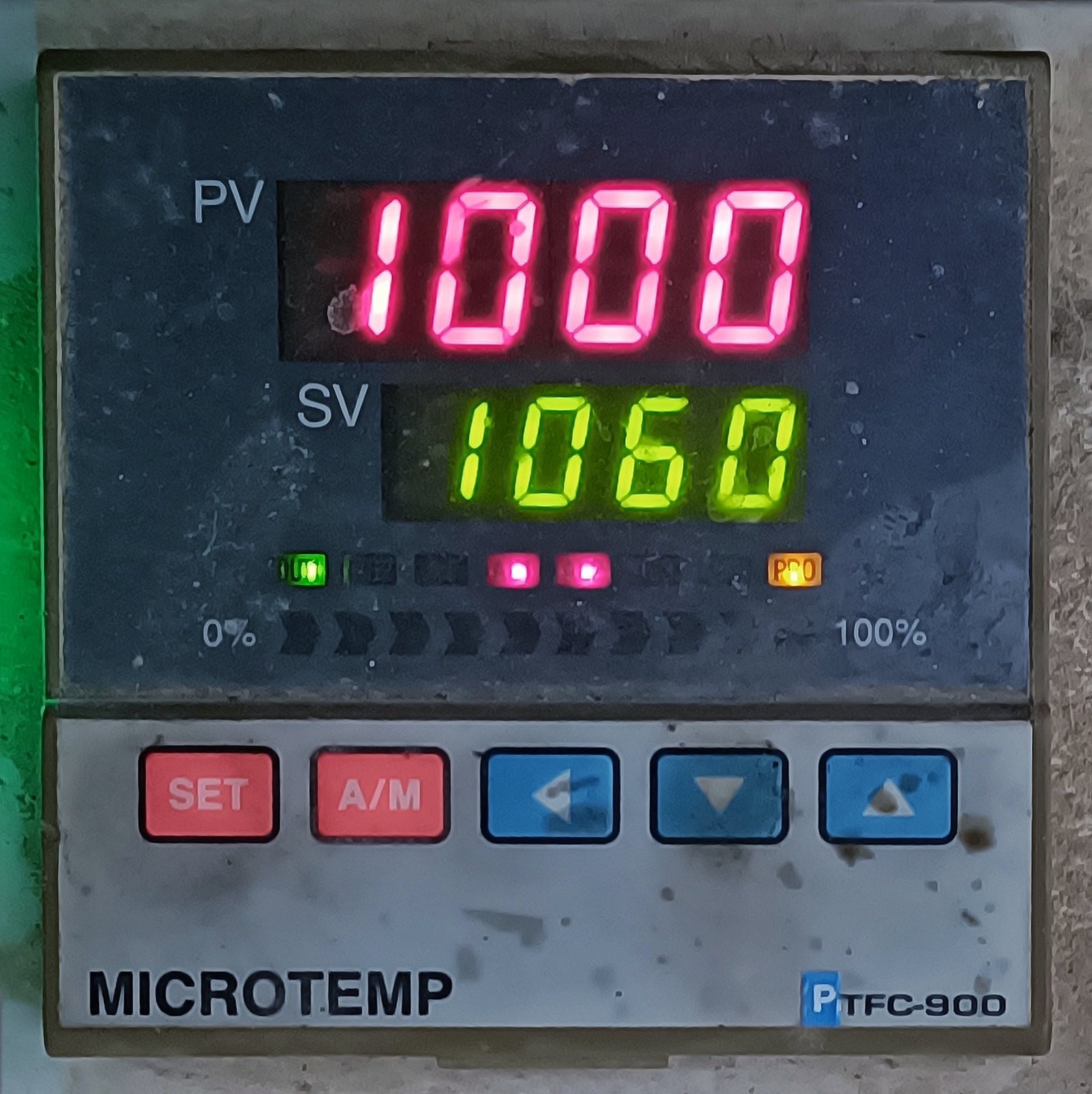
That diagnosis fit what I know about the oven itself. Mine is an old pottery kiln, built the old way, with an enormous thermal mass. It takes around twelve hours to climb to the temperatures steels like AEB-L and 14C28N ask for (one of the reasons this workshop runs in batches: when the kiln finally gets there, it earns its keep on a full load, not a single blade). And once there it is precise and stable: it holds a soak flat and does the same thing tomorrow.
That was exactly the disguise: the kiln reaches “800” today and “800” next week, perfectly repeatable, and repeatably wrong. The instability was never in the machine. It was in the sensor’s idea of the truth, and repeatability had hidden it for years.
Fine. Hypothesis on the table. Now, how does a man verify it with no electronics background, in a remote spot, without ordering a reference thermocouple and waiting weeks? The way I like doing things anyway: with what’s on hand.
Melting points don’t drift
The trick is that pure substances change state at temperatures physics has already fixed. Aluminum melts at 660°C and copper at 1085°C anywhere; they’re actual calibration points of the international temperature scale. Put a known material in the kiln, note what the display reads at the exact moment it transforms, and you have one honest kiln calibration point. Enough points and you have the whole map of the lie.
The kiln calibration kit came from the kitchen and the scrap bin:
- Sugar: melts and caramelizes at ~186°C. Checks the tempering range.
- Aluminum foil: pure aluminum, 660°C. Alloyed aluminum scrap is useless here; alloys melt low and vague. Foil is the pure, cheap form.
- A magnet on a steel rod: steel stops being magnetic at the Curie point, ~770°C.
- Coarse salt: 801°C, sitting dead center in the carbon steel hardening range.
- A ring of copper pipe: 1085°C, covering stainless territory.
Running the kiln calibration tests
The method is step, soak, peek: set the kiln below the expected trip, let it stabilize, write down the stable reading before opening the door (once it’s open the display means nothing), quick look, close, raise five degrees, repeat. The melted markers are latches: once tripped, they stay tripped, so a glance answers “did we pass X during that soak” without ambiguity.
Each marker taught its own lesson. The foil, crumpled loose, melts inside its own oxide skin and keeps its shape: the eye swears it never melted while the metal inside went liquid. The fix: compress the ball hard beforehand, and squeeze the retrieved ball with pliers. Round, smooth beads mean it was liquid. Soft plasticine means hot solid, not melted: try again.
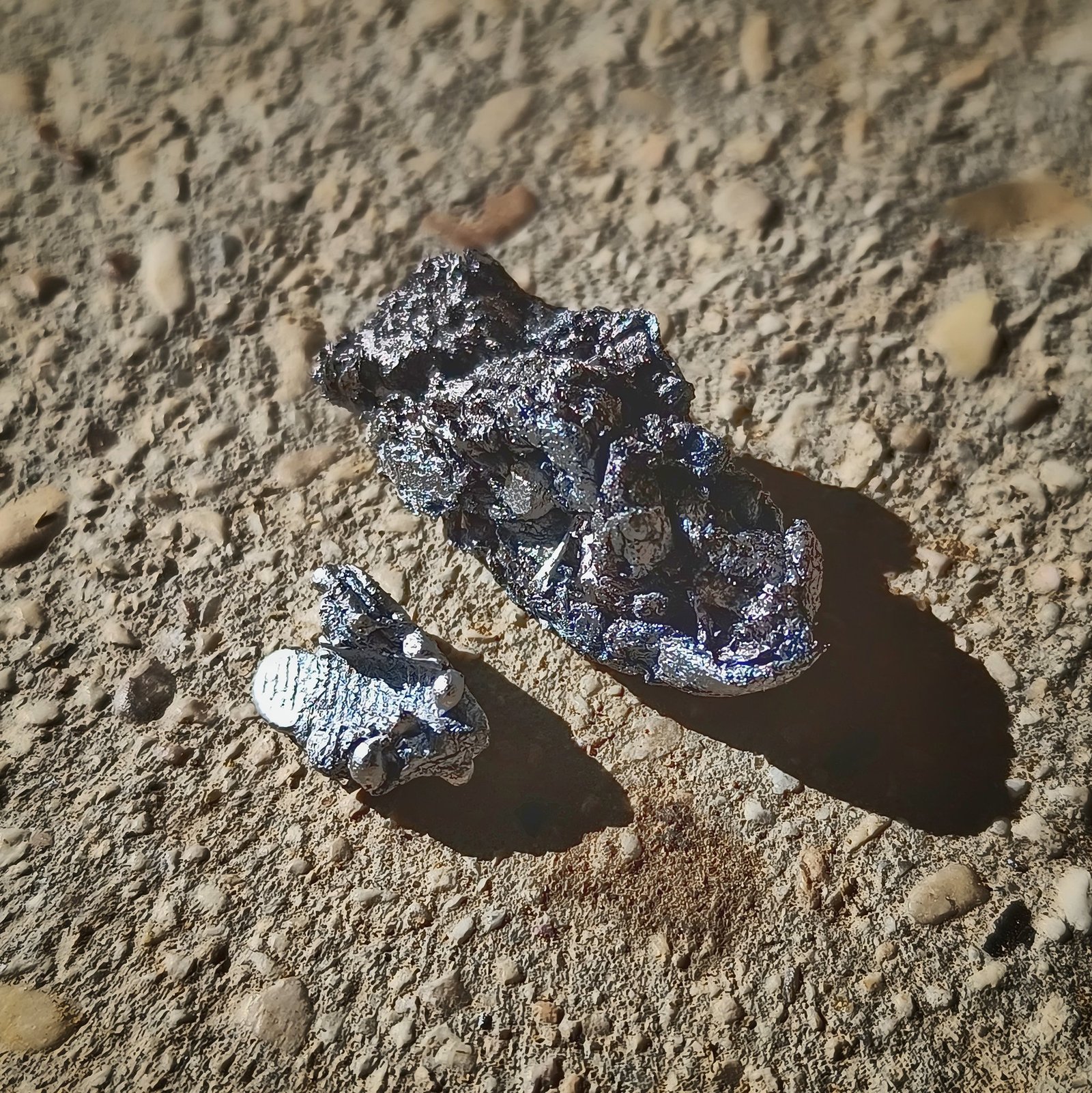
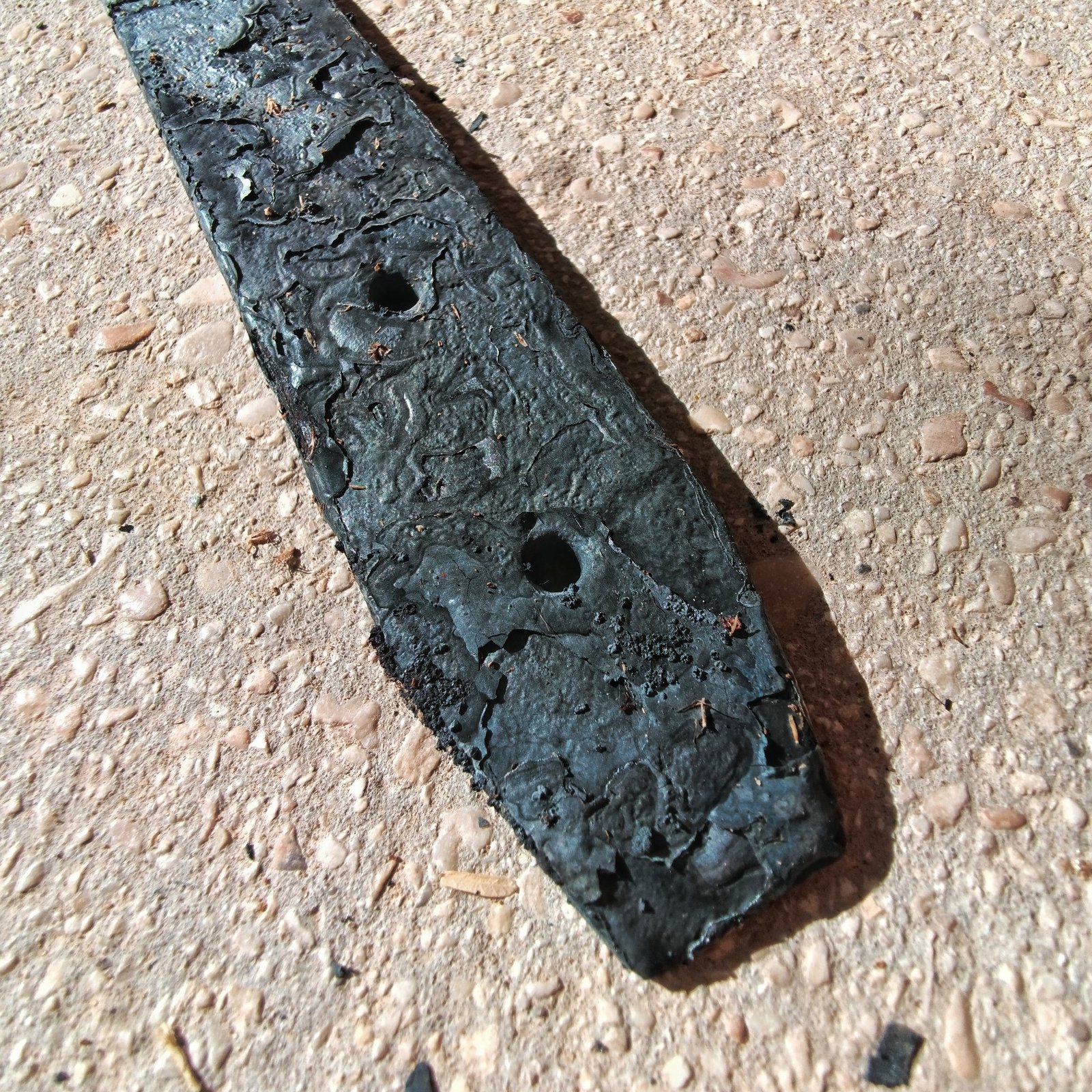
The magnet is a floor, not a target: non-magnetic proves you passed 770, nothing more, and once transformed the steel stays non-magnetic even as it cools, so there’s no latch to re-read later. The salt announced its trip by melting into a clear puddle and eating a hole through its stainless dish: molten salt is not a polite substance. The copper gives a warning first: shiny sweat beads on the black scale about twenty degrees before the ring collapses into a bead.
What the map said
At sugar temperature, the kiln was honest to within a degree. At aluminum: display 25 degrees high. At the Curie point: 25 again. At salt: around 20. At copper: past 40. The error wasn’t a constant to subtract once, it grew with temperature, so the fix is a kiln calibration curve through the measured points, not a single number scribbled on the controller.
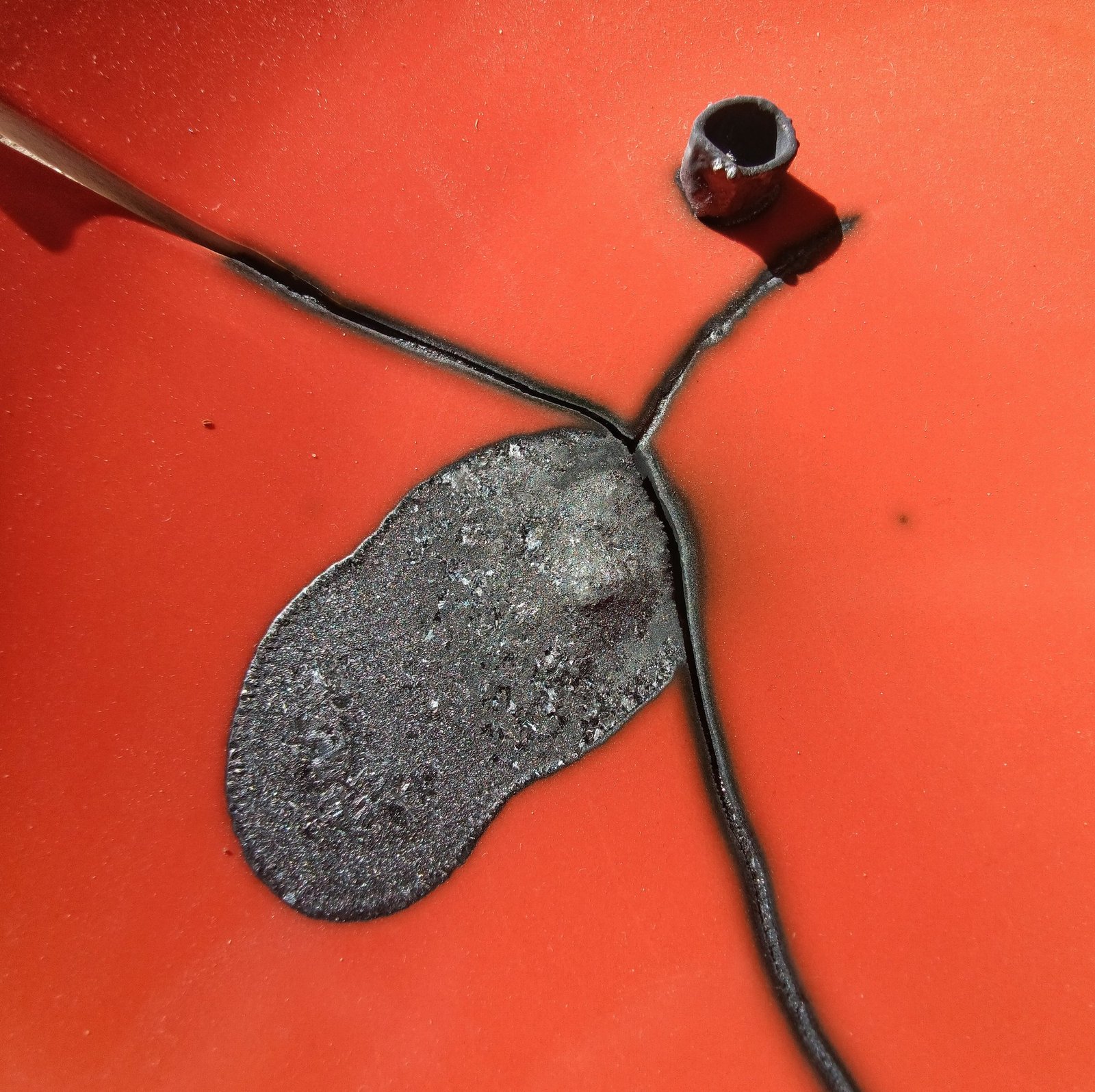
And there was the answer to the file test. Ask that kiln for a carbon steel’s 800°C and the steel soaks at roughly 775, below where its structure finishes transforming. The blade quenches soft, and the display never blinks. Years of the occasional stubborn batch, explained by forty invisible degrees.
The retest
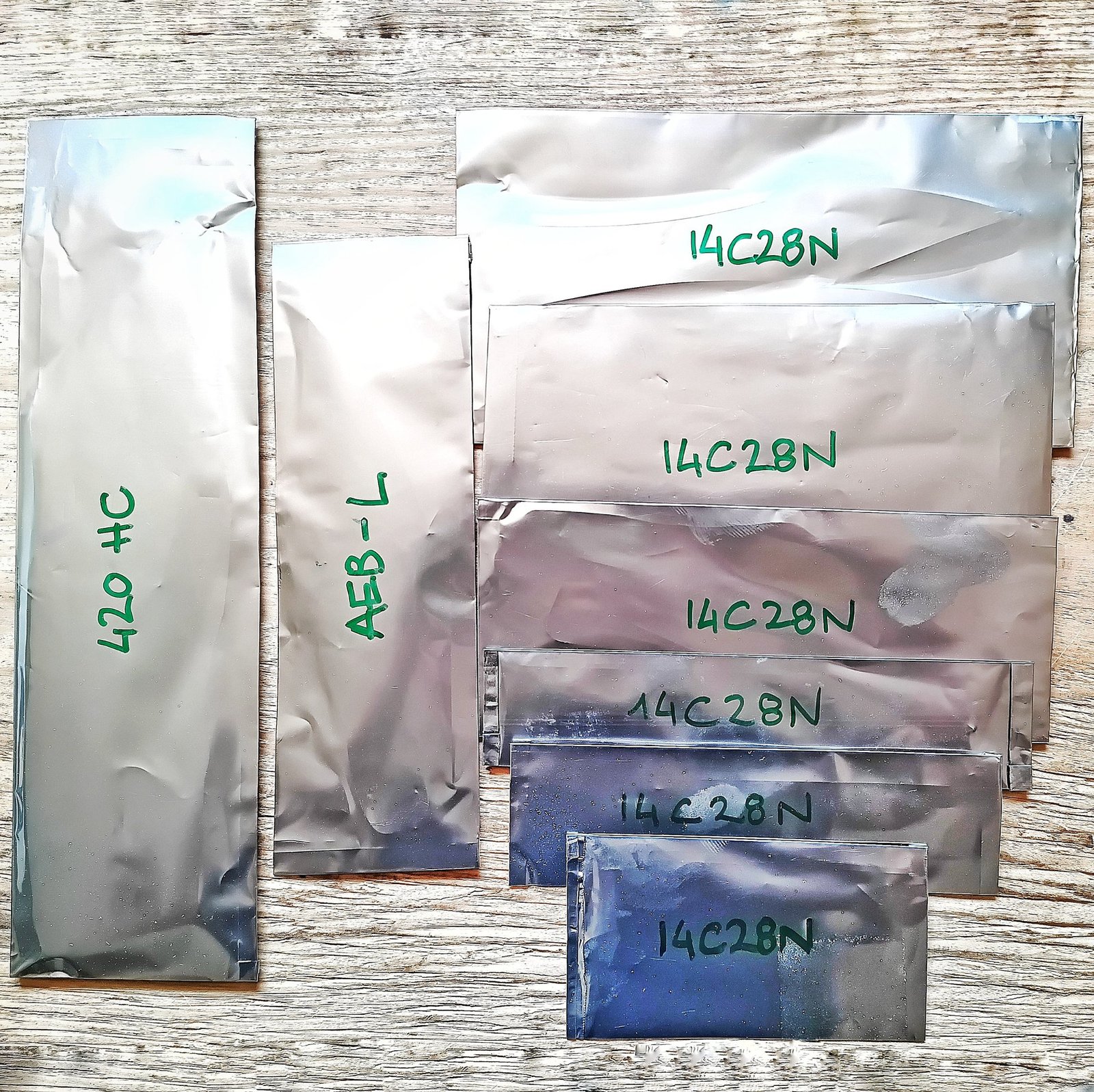
Then the part that mattered: I hardened the whole batch again, every steel on its corrected setpoint from the kiln calibration curve. This time the file skated on every edge. From there, tempering: a first cycle shared by all my steels, 150°C for two hours, then a second cycle tailored to each steel and to the work each edge is headed for (a thin slicer and a chopper don’t want the same hardness, and the second temper is where that gets decided).
What runs differently now
The marker test has joined the routine of this workshop: kiln calibration re-run yearly and after any thermocouple or controller change, because drift never announces itself. I’d argue it belongs in the routine of every workshop that hardens steel: it costs a few spoonfuls of sugar and salt, foil, a magnet and a slice of scrap pipe, and it answers a question no display can be trusted to answer about itself. Every setpoint here now comes off the measured curve, never raw from the book.
Every hardening and temper goes into a pencil log next to the kiln. And the file test keeps its job at the door: it’s the one that raised its hand in the first place.
Everything the process taught me ended up in writing. With the same AI at the bench, I built a 25-page workshop manual: the kiln calibration method and its measured curve, plus complete hardening and tempering references for every steel I regularly run, each number traced to its source: the steel producers’ own data sheets and Larrin Thomas’s published work. It lives next to the kiln, and it gets a new dated entry every time a number changes and a reason exists.
The same lessons pushed one project further: I’m now working on the design of a new kiln, purpose-built for blades, with a fairly unconventional layout that should cut the hardening cycle from half a day to a fraction of it. That one deserves its own post when it’s ready.
I keep trying to learn what actually happens in this workshop. This time it was the oven’s turn. That’s the craft as I understand it: understanding one more piece of the process each year, so that the knives that leave this bench are serious, professional, sensible tools. If you run a kiln, run the markers. If you buy blades, it’s a fair question how the maker knows his oven tells the truth.