
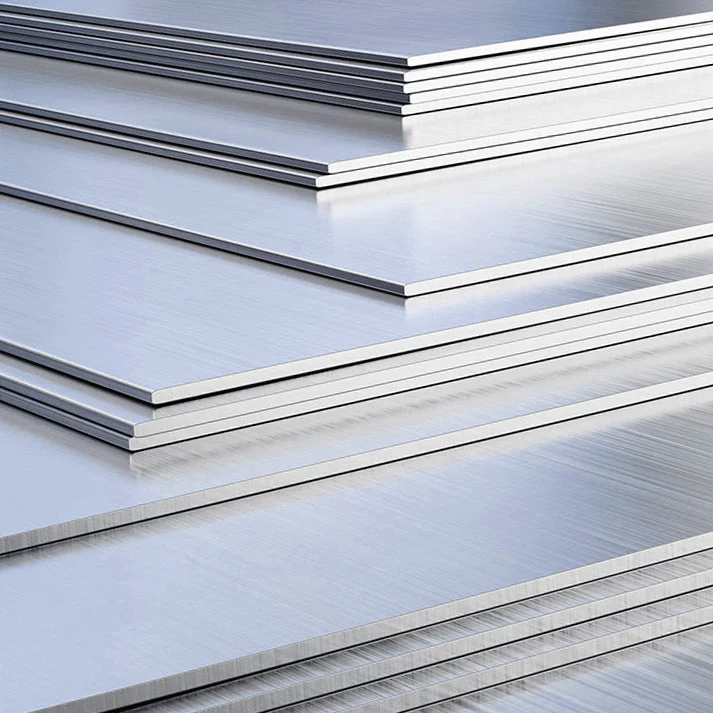
Metallurgy of Necessity: The Bladetricks Stainless Steel Selection
Choosing a stainless steel for a blade is not an exercise in romanticism; it is a calculated, cold decision. In the workshop, I do not seek a soul for the metal; I seek a predictable response to stress. The decision-making process for every Bladetricks tool begins with a single, uncompromising question: will it perform as required under duress?
For my designs, that question generally begins and ends with toughness. A blade that cannot withstand real-world mechanical shock is not a tool—it is a liability. After a long, cautious, and practical evaluation of modern alloys, the data led me to two specific materials that now define the stainless branch of my work: 14C28N Sandvik and AEB-L steel.
Beyond the Rust: The Practicality of Stainless
I have built a reputation on traditional carbon and spring steels like 8670 and C67S. We value their resilience and their aggressive edge. However, carbon alloys demand a certain reverence; they require constant care to stave off the oxidation that is their inevitable destiny. For the professional operator in high-moisture, maritime, or humid environments, this maintenance is often a luxury they cannot afford.
The singular advantage of a high-tier stainless steel is its indifference to such concerns. It provides a level of corrosion resistance that frees the user from the burden of oiling and cleaning after every exposure. This fundamental practicality is the core reason I have integrated these alloys. In an industry obsessed with the marketing of the latest “supersteel,” I remain loyal to the principle of offering affordable, functional, and brutal tools. These two steels, while distinct in their chemistry, are nearly identical in their shared purpose and impressive performance.
Two Steels for the Same Professional Purpose
There is a common, and often expensive, misunderstanding that every blade requires a mythical, flawless alloy with exotic price tags. The truth is that a truly great steel is a well-balanced one. Both 14C28N and AEB-L epitomize this balance. Their value lies in a toughness that is both deliberate and professional.
These alloys possess an excellent ability to take and hold a very fine edge—a crucial property for pikal tools and defensive assets meant for serious cutting—but they do so without becoming brittle. Many “premium” steels achieve high hardness at the expense of impact resistance; they chip when they hit a hard target. AEB-L and 14C28N do not. Because of this practical parity, I utilize them interchangeably across new models like the Tusk or the Diplomat. A customer can be assured that a blade made from either material is built on the same foundation of unwavering mechanical integrity.
Technical Nuance: 14C28N vs. AEB-L
While they perform to the same standard in the field, it is worth noting the subtle technical deviations between the two. In a purely metallurgical sense, 14C28N is slightly tougher. The addition of Nitrogen in its chemistry allows it to reach a high hardness while remaining marginally more resilient against stress and hard impacts. It is also “more stainless” than AEB-L, offering a higher threshold against salt and chemical corrosion.
AEB-L, originally developed for razor blades, is prized for its ultra-fine grain structure. This allows it to achieve a terrifyingly sharp edge that is easy to maintain in the field. It behaves remarkably like a high-carbon steel during the heat treatment process, giving it a “bite” that few other stainless steels can replicate.
The Bladetricks Philosophy of Materials
These aren’t dramatic, life-altering differences, but subtle details that speak to the specific intent behind each tool. The choice was never about aesthetics or following the “flavor of the month” in the knife community. It was about function—the core tenet of Bladetricks.
What I prioritize is a sensible balance of toughness, edge retention, and corrosion resistance, weighed against availability, affordability, and ease of work for the maker. If a steel is impossible to source or so difficult to grind that it triples the price of the tool, it fails the practicality test. These stainless steels simply work, and they work well. This dedication to performance over pretense is how I consistently provide a better product and a more reliable experience for my customers.


