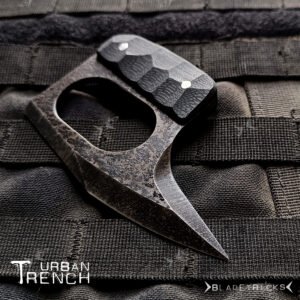
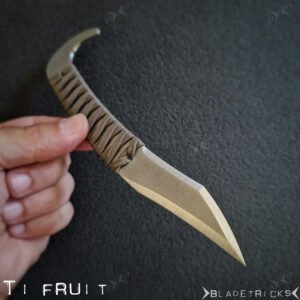
PIKAL REVERSE GRIP COMBAT KNIVES
The Pikal System — A Bladetricks Original
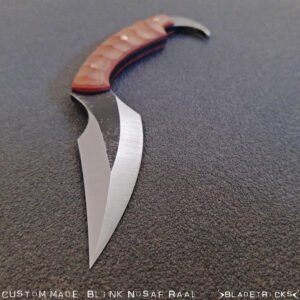
It is not an aesthetic. It is a cold application of biomechanics. Derived from the Visayan term meaning “to rip,” the pikal technique uses a Reverse Grip Edge In (RGEI) orientation — and my work on this system predates the current global interest in it by over a decade. Many RGEI designs seen worldwide today carry the DNA of original Bladetricks geometries. A connoisseur will recognize the lineage.
What a Pikal Knife Must Do
A pikal knife handle is the steering wheel of the edge. Width, traction, and indexing are not optional — they are the difference between control and failure under the resistance of an inward rip. The tip must be reinforced for high-impact penetration. The geometry must be optimized for the pull cut. These are not preferences. They are mechanical requirements.
The Blink Grip
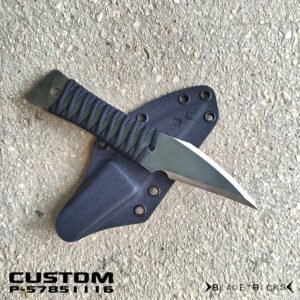
The most critical component of the pikal system is not the strike. It is the draw. To solve this, I developed the Blink Grip — a handle architecture that allows a near-instantaneous, blind-indexed draw from a Kydex sheath with no mechanical parts, no buttons, no conscious thought required. The edge is correctly oriented the moment the tool clears the sheath. The Blink Grip has become a global reference point for pikal and self-defense knife design. I note that fact without enthusiasm.
From Hook to Straight — A Deliberate Shift
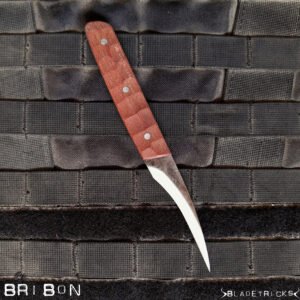
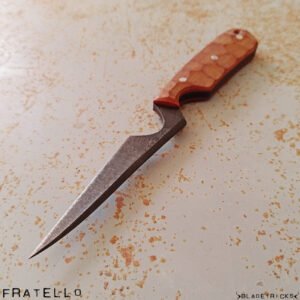
While most pikal knives feature a hooked or hawkbill profile, I have shifted my focus toward straighter, more traditional geometries. These profiles maintain the full pikal advantage in the reverse grip while providing a more robust tip, easier maintenance, and a cleaner path of entry. Function over aesthetic — always.
For the full technical analysis of the pikal system, read the dedicated pikal blog post.
Showing all 6 results