DAGGERS: PRECISION PIERCING TOOLS & TACTICAL GEOMETRY
THE GEOMETRY OF THE CLOSE-QUARTER GAP
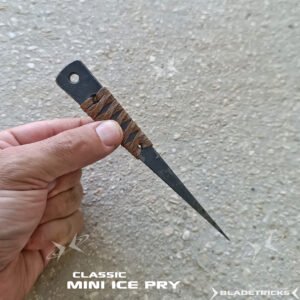
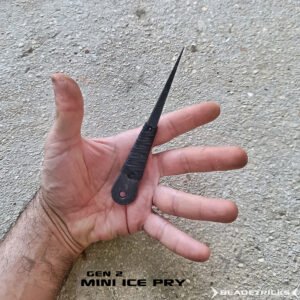
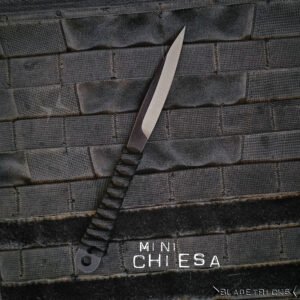
A dagger is defined by its geometry. Historically, it is the weapon of the close-quarter gap, where length is a liability and a point is a necessity (at least when used as a weapon rather than a ritual object). While academic definitions vary, I conceive the dagger as a piercing tool where the tip of the blade resides precisely on the central axis of a symmetrical handle. This alignment ensures that the force of a strike travels in a perfectly straight line, removing the guesswork from the hand.
A HISTORY DEFINED BY THE SHADOW
The history of the dagger is a history of the shadow: a hidden insurance policy used when the primary weapon failed or the space became too confined for a swing. It has evolved from the bronze bodkins of antiquity to the rondel and to the specialized stiletto of the Renaissance. In the modern tactical landscape, the requirement remains unchanged: a slim profile for enhanced penetration and concealment, and a tip that refuses to buckle.
THE PROGRESSIVE GRIND: ENGINEERING SURVIVAL
My daggers are built on this lineage but refined by physics. I often use a Progressive Grind (my personal evolution of the compound grind) to solve the inherent weakness of the piercing tool. By tapering from an acute slicing edge at the base to a reinforced, obtuse angle at the tip, I give the steel the required meat it needs to survive impact.
AXIAL ALIGNMENT AND THE REINFORCED TIP
The point sits exactly where your brain expects it to be. My blades do not always require a double edge or symmetry to achieve this; they require a focus on the central axis. Fragile tips and fluff are discarded in favor of a reinforced instrument built for the professional who treats precision as a non-negotiable requirement.
Showing all 4 results