
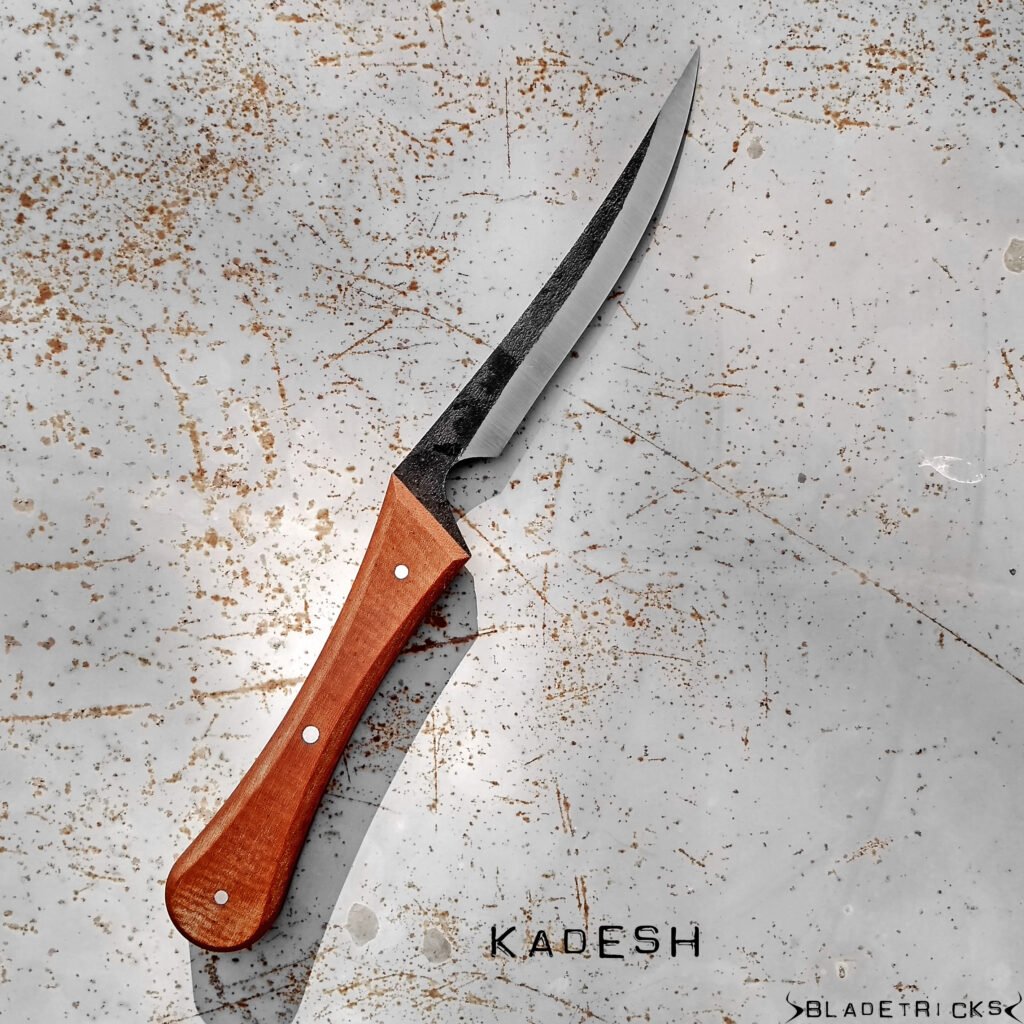
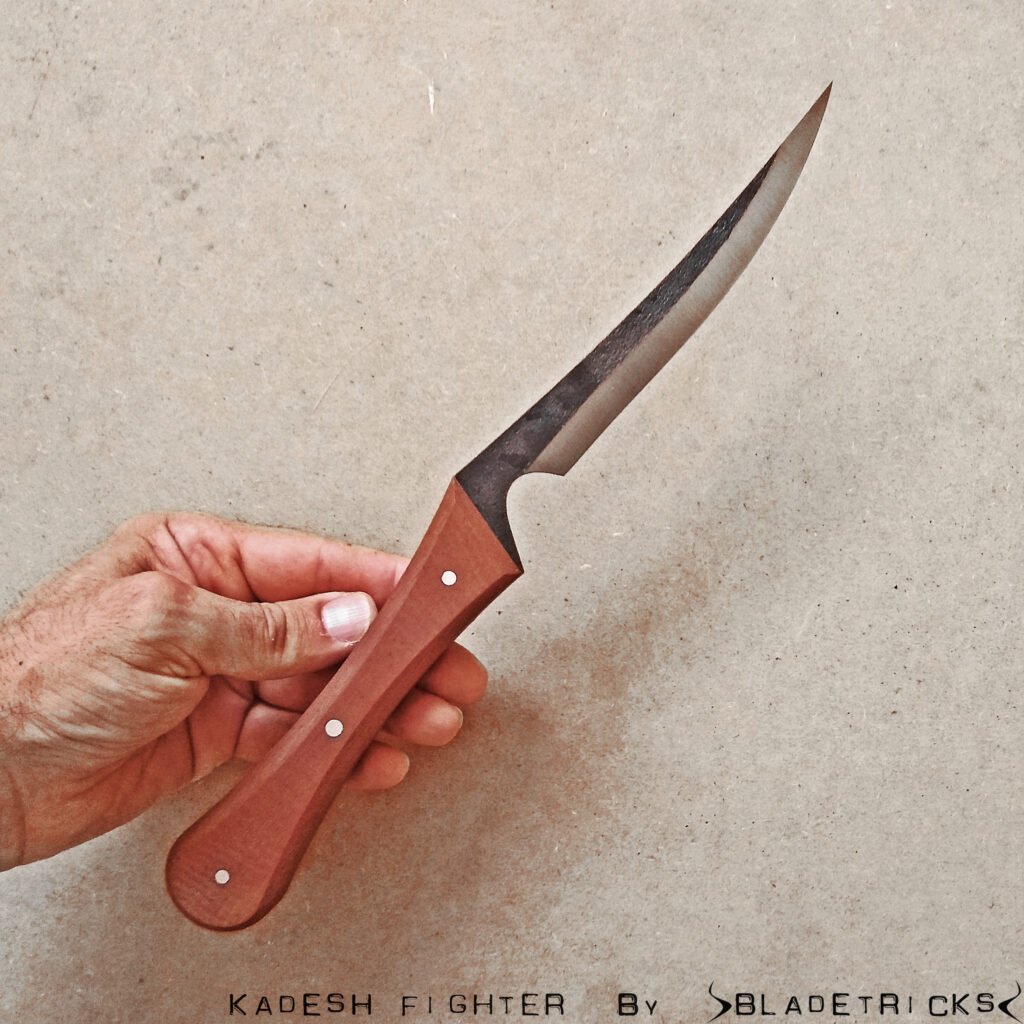
BLADETRICKS CLASSIC KADESH DAGGER, MICARTA
I wanted to build a fighting dagger for a long time. The concept was clear from the start — a dagger has to be simple, intuitive, and imposing. Not ornamental. Not a conversation piece. A tool designed for one purpose, with nothing added that doesn’t serve it.
It took a while to arrive at the right design. The Classic Kadesh was the result. Newer versions of the Kadesh followed over the years — the geometry evolved, details shifted. But this one never left the lineup. Some proportions are right the first time.
The Dagger Blade
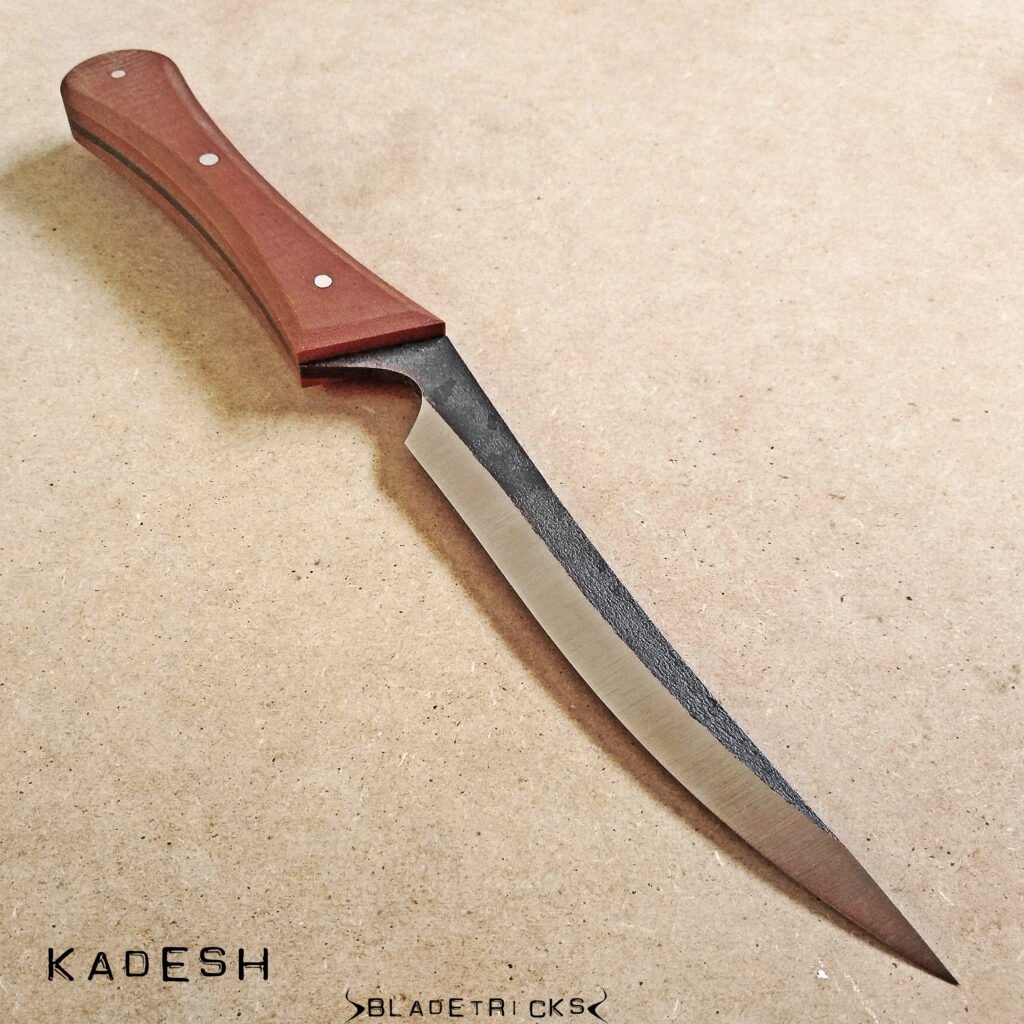
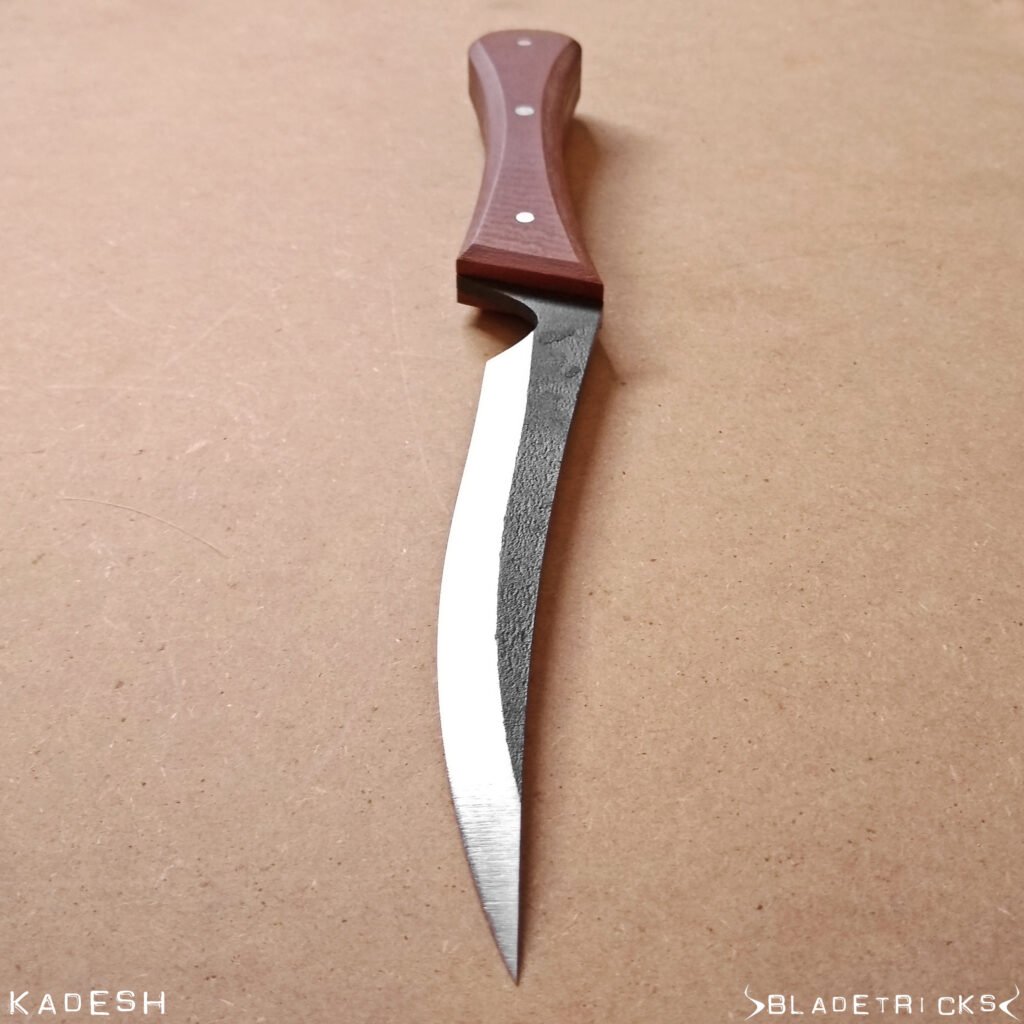
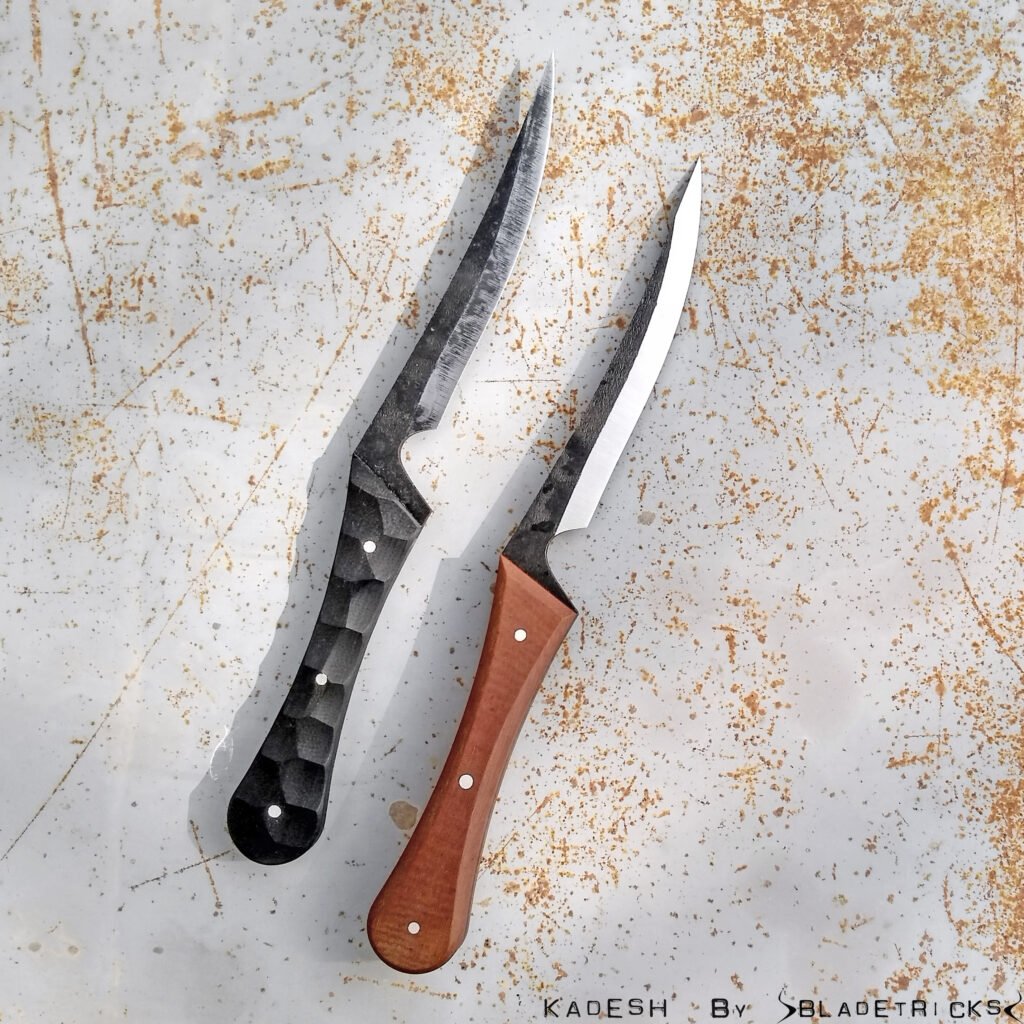
Long and slender, with a recurve single edge and a sharp, acute point. The cross section is thinner than standard — deliberately. I wanted outstanding penetration capability without sacrificing cutting performance, and the geometry delivers both. Less material where it isn’t needed. More where it is.
Exclusively designed for surprise CQC situations. The blade does not try to be versatile. It does one thing well, and it does it completely.
The Steel
For a blade this slender, steel choice isn’t a preference — it’s a structural requirement. I needed a steel that could hold this geometry under real stress without failing. The answer was 4340 high-strength alloy steel.
4340 is the reference for toughness. It’s the same material used in military aircraft components and heavy-duty crankshafts — chosen in those applications for exactly the same reason I chose it here: exceptional tensile and yield strength under extreme load. Properly heat treated to ±55 HRC, it produces the toughest blade achievable at this cross section, with acceptable edge retention. There was no other serious option.
The Handle
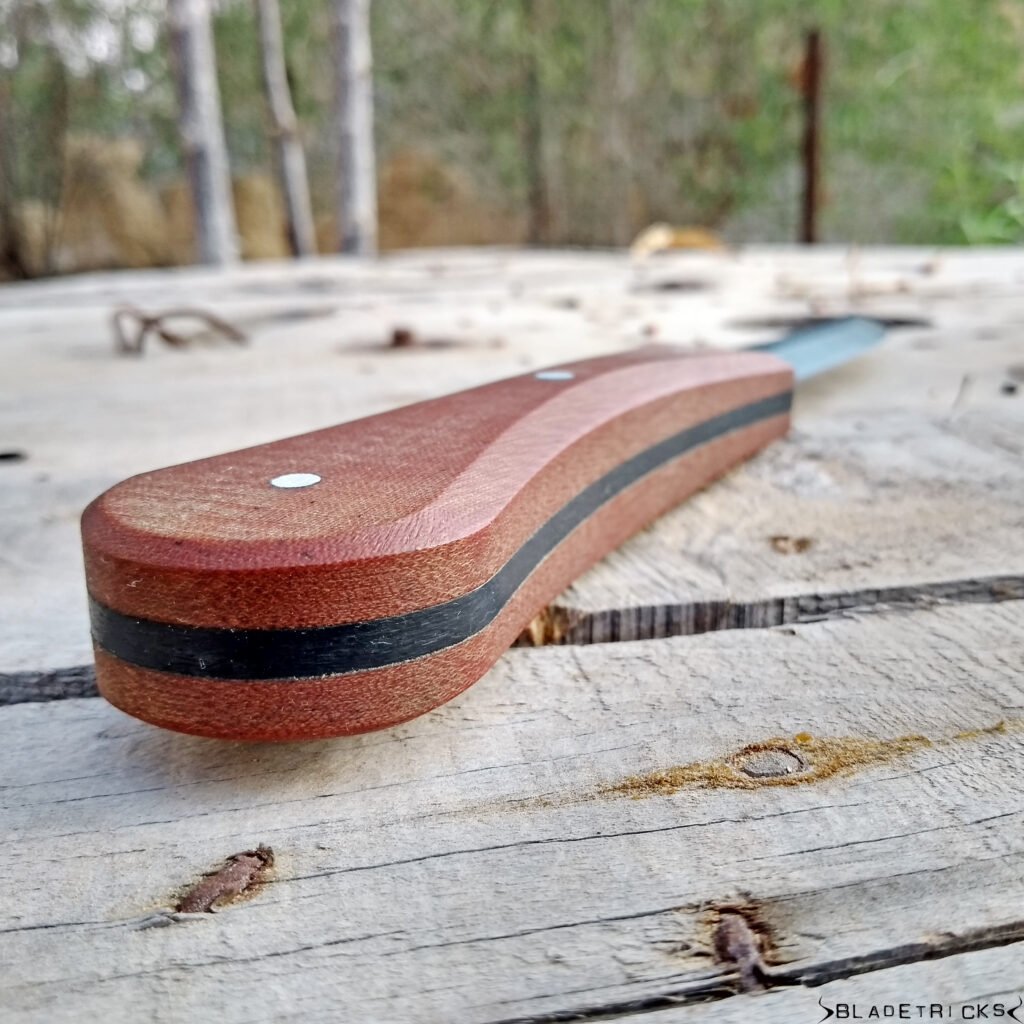
Natural industrial grade linen micarta. I chose it because it works — dense, dimensionally stable, unaffected by moisture, sweat, or extended hard use. It gets worse-looking and better-performing over time. For a working knife, that’s exactly the right trade.
The scales are fitted full tang, pinned and riveted with aluminium pins, then bonded with slow-cure epoxy — 24 hours clamped in the bench vice. Not a fast process. The result is a handle with no movement, no loosening, no weak points. It will outlast almost anything you put it through.
Grip Versatility
I designed the handle geometry to lock naturally in every standard fighting grip position — no adjustment, no repositioning required. Forward grip: hammer, saber, Filipino, reinforced palm. Reverse grip: edge-in, edge-out. In each position, the hand finds its place without thinking about it.
In a CQC situation, that’s not a comfort feature. It’s a functional requirement.
The Fighting Dagger Lineage
The Classic Kadesh sits in the tradition of the commando fighting daggers developed since the Second World War — the Fairbairn–Sykes, the Gerber Mark II, carried by OSS operatives, Marine Raiders, the Dutch Commando Corps, the Rangers. Each of those designs was built around the same principle: one purpose, no compromise, nothing wasted.
That’s what I was working toward with the Kadesh. I built my version of it. This is still the one I reach for.
The Classic Kadesh is the Bladetricks interpretation of that lineage. A handmade fighting dagger built one at a time, with the same intent those designs were built around. Nothing added that doesn’t serve the purpose. Nothing removed that does.
Specifications
4340 high-strength alloy steel, 4 mm blade thick
OAL: 323 mm – Blade: 180 mm – Edge: 153 mm
Chisel grind with secondary bevel
Full tang construction
Natural linen micarta handle, pinned, riveted, and epoxied
Kydex sheath included
Out of stock